
Executive Summary: The Intelligence Shift in Traffic Signage 2026
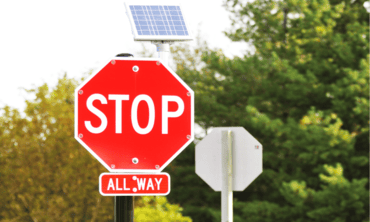
As we move through 2026, the paradigm of road safety is undergoing a fundamental shift. Traditional, static traffic signs are no longer sufficient to meet the complex demands of modern urban mobility and autonomous transit. The industry has transitioned from passive warnings to dynamic, data-responsive safety ecosystems. At the heart of this revolution are solar-powered traffic signs that do more than just reflect light—they perceive, communicate, and adapt.
The role of solar signs has become critical in reducing nighttime and adverse weather fatalities. With the integration of high-intensity LEDs and intelligent control systems, these signs provide visibility that static alternatives simply cannot match, especially in remote or off-grid areas. RUICHEN Traffic has set the benchmark for this new era, establishing a reliability standard that ensures these life-saving tools remain operational in the most extreme conditions, from tropical typhoons to arid desert heat.
Key Technological Trends for 2026
The solar traffic sign of 2026 is a sophisticated piece of electronic infrastructure. Three core technological pillars define the current landscape:
1. Smart Energy Management: Next-Gen MPPT and High-Efficiency PV
Energy harvesting has reached new levels of efficiency. - Low-Light Optimization: 2026-grade monocrystalline panels are now engineered to capture energy across a broader spectrum, allowing for consistent charging even during the prolonged monsoon seasons of Southeast Asia or the overcast winters of Northern Europe. - Adaptive MPPT Controllers: Next-generation Maximum Power Point Tracking (MPPT) algorithms now feature AI-driven predictive charging. These controllers analyze historical weather patterns to optimize the state-of-charge (SoC), ensuring that the battery is never fully depleted during multiple consecutive days of rain.
2. IoT & Remote Connectivity: The Cloud-Connected Roadway
Infrastructure is no longer isolated. - Real-Time Health Monitoring: Through integrated IoT modules (LTE-M/NB-IoT), road authorities can now monitor the "health" of every sign in their network from a central dashboard. Parameters such as battery voltage, LED current, and panel efficiency are tracked in real-time. - Dynamic Brightness Adjustment: Using cloud-based environmental data, signs can automatically adjust their lumen output. If a local weather station reports heavy fog, the sign boosts its intensity; during clear nights, it dims to conserve energy and prevent driver glare.
3. Active Visibility Enhancements: AI-Driven Flashing Patterns
Visibility is about more than just brightness; it's about capturing attention without causing distraction. - Intelligent Dimming: Wide-angle LEDs now feature "Soft-Start" and adaptive dimming to ensure that while the sign is visible from 800 meters, it does not blind the driver at close range. - AI-Driven Flashing: Modern signs can change their flashing frequency based on traffic speed. If sensors detect a vehicle approaching a hazardous curve at high speed, the sign transitions to a high-frequency strobe to maximize the urgency of the warning.
The RUICHEN Traffic Advantage: Engineering for the Next Decade
While many manufacturers offer "smart" features, RUICHEN Traffic focuses on the Reliability Standard—the assurance that the technology will survive the brutal reality of the roadside for a decade or more.
1. Extreme Durability: The IP67 Standard
RUICHEN signs are built to withstand the most hostile environments on Earth. - UV-Resistant & Anti-Corrosive Housing: Using marine-grade ADC12 aluminum and specialized powder coatings, our housings are immune to the salt-air corrosion of coastal highways and the intense UV radiation of high-altitude mountain passes. - Waterproof Integrity: With IP66 and IP67 ratings, RUICHEN components are hermetically sealed. Our signs have remained fully operational even after being submerged during urban flash floods.
2. System Stability: High-Cycle LiFePO4 Technology
The battery is the heart of any solar system. RUICHEN utilizes Grade-A Lithium Iron Phosphate (LiFePO4) batteries. - Longevity: Unlike lead-acid or standard lithium-ion, our LiFePO4 cells are rated for over 3,000 cycles at 80% Depth of Discharge (DoD), ensuring a consistent service life of 5 to 8+ years. - Thermal Stability: Our batteries are equipped with advanced Battery Management Systems (BMS) that prevent thermal runaway, even when ambient temperatures exceed 50°C.
3. Impact & Wind Resistance: Typhoon-Grade Engineering
In regions prone to extreme weather, structural integrity is non-negotiable. - Signal No. 4/5 Readiness: RUICHEN solar signs and their mounting brackets are aerodynamicamente designed and stress-tested to withstand wind speeds exceeding 250 km/h, equivalent to a Category 5 hurricane. - Vibration Damping: The internal circuitry is "ruggedized" to withstand the constant micro-vibrations caused by heavy freight traffic on major highways.
Operational Benefits for Road Authorities
Choosing RUICHEN’s high-reliability standard provides immediate and long-term advantages for DOTs and municipal planners.
1. Zero-Grid Dependency
RUICHEN solar signs provide a "plug-and-play" safety solution for remote rural areas and off-grid highways. There is no need for expensive trenching, cabling, or monthly electricity bills.
2. Lower Total Cost of Ownership (TCO)
The true cost of a traffic sign isn't the purchase price; it's the cost of maintenance and replacement. - Longevity as a Cost-Saver: By using components that last twice as long as "budget" alternatives, RUICHEN reduces the frequency of site visits, bucket truck rentals, and road closures, resulting in a significantly lower TCO over a 10-year period.
3. Rapid Deployment
In emergency situations or new construction zones, RUICHEN signs can be installed in minutes. This speed of deployment allows road authorities to respond instantly to emerging safety hazards.
Specialized Applications in 2026
Smart School Zones
RUICHEN signs can be integrated with pedestrian presence sensors. The signs remain dormant until a child is detected near the curb, at which point they activate a high-intensity warning, ensuring that the warning is always relevant and never ignored due to "sign fatigue."
Hazardous Curve Warnings
For winding mountain passes prone to fog, our signs use synchronized flashing. A series of signs can flash in a sequential "wave" pattern to guide drivers through the geometry of the curve in low-visibility conditions.
Emergency & Construction Zones
Our portable solar signs offer high-reliability temporary traffic control. These units can be moved from site to site, providing the same IP67 protection and high-intensity visibility as our permanent installations.
Technical Specification Checklist for B2B Buyers
When evaluating solar signage in 2026, look for these critical metrics: - Battery Capacity vs. Load: Ensure at least 5-7 days of autonomy (operation without sun). - Panel Wattage-to-Load Ratio: The panel should be able to fully charge the battery even during short winter days. - Housing Material: Demand ADC12 aluminum or equivalent; avoid plastics that degrade under UV. - Compliance: Ensure the sign meets or exceeds MUTCD (US) or EN12352 (EU) standards. RUICHEN’s specifications consistently exceed these international requirements.
Conclusion: Partnering for a Safer Tomorrow
In the critical field of traffic infrastructure, the choice is often between "Price" and "Reliability." However, when lives are at stake, reliability is the only metric that matters. Choosing the RUICHEN Traffic Reliability Standard means investing in a safer, more resilient future for our roads.
Explore RUICHEN Traffic’s high-reliability solar traffic sign solutions here: https://www.rctraffic.com/products/traffic-sign/
Contact our global engineering team today for municipal tenders, project consultations, and global distribution inquiries. Let's build the safe roadways of 2026 together.
Extended FAQ Section
Q1: How do solar signs perform during 5 days of rain? A1: RUICHEN signs are designed with a minimum of 7 days of autonomy. Our high-efficiency panels and MPPT controllers are optimized to harvest energy even from diffused ambient light during heavy rain, ensuring the battery remains above critical levels.
Q2: What is the lifespan of the LED and battery components? A2: Our Osram/Cree LEDs are rated for 100,000 hours (approx. 11 years of 24/7 use). Our LiFePO4 batteries typically last 5-8 years depending on the environmental temperature and duty cycle.
Q3: Can these signs be integrated into a city's central management system? A3: Yes. With our optional IoT modules, RUICHEN signs support NB-IoT and LTE-M protocols, allowing for seamless integration into any Smart City central management platform.
Q4: Are they resistant to coastal salt-air corrosion? A4: Absolutely. We use marine-grade ADC12 aluminum and C5-M anti-corrosion coatings specifically designed for coastal and offshore environments.
Q5: Is the installation complicated? A5: Not at all. Since they are self-powered, there is no wiring required. Most signs can be mounted to a standard 2-inch or 3-inch post using basic tools in under 15 minutes.
Q6: Do the signs work in extreme cold? A6: Yes. Our LiFePO4 batteries include a low-temperature charging protection and can operate in temperatures as low as -20°C. For even colder climates, we offer heated battery enclosures.
Deep Technical Analysis: The Engineering of Optical and Energy Resilience
To fully grasp the "RUICHEN Standard," one must look at the granular engineering details that separate professional-grade signage from consumer-grade alternatives.
1. Optical Precision: Asymmetric Beam Patterns
In 2026, urban light pollution is a major regulatory hurdle. RUICHEN’s LEDs are not just "bright"; they are "precise." We utilize asymmetric optical lenses that shape the light beam. Instead of scattering light in a 360-degree radius, the beam is concentrated into a 30-degree horizontal and 15-degree vertical cone directed at the oncoming driver's eye level. This increases the effective candela (luminous intensity) by 300% without increasing power consumption, while simultaneously keeping the surrounding residential areas dark.
2. Materials Science: Beyond Standard Coatings
The roadside is a chemically hostile environment. Tires, exhaust fumes, and road salts create a corrosive cocktail. - C5-M High-Durability Coating: Our aluminum housings undergo a 7-stage pretreatment process followed by a C5-M (Marine High) powder coating. This is the same standard used for offshore oil rigs, ensuring that the sign remains structurally sound even after 10 years of exposure to salt spray and industrial pollutants. - Self-Cleaning Polycarbonate: The LED windows are treated with a nanotechnology-based hydrophobic layer. Rainwater doesn't just run off; it "beads" and carries away dust and road film, ensuring that the sign's visibility isn't compromised by dirt accumulation.
3. Energy Resilience: The "Autonomy" Calculation
In the technical world of 2026, we talk about System Autonomy. This is the number of days the sign can operate at full intensity without a single photon of sunlight. - Oversized Energy Buffers: While competitors design for 3 days of autonomy, RUICHEN standards mandate a minimum of 7 to 10 days. This is achieved through a precise balance between the solar panel's Pmax (Peak Power) and the battery's total Watt-hour capacity. - Micro-Grid Logic: Each sign operates as an independent micro-grid. The internal controller monitors the "State of Health" (SoH) of the battery. If it detects a long-term decline in charging efficiency (due to panel shading or aging), it automatically adjusts the LED duty cycle to prioritize safety over aesthetics, ensuring the sign never goes dark.
The Economic Case: ROI and the "Safety-as-a-Service" Shift
As we look toward the late 2020s, municipalities are shifting from simple procurement to Lifecycle Management. - Predictive Maintenance Savings: By using RUICHEN’s IoT-enabled signs, road authorities can move from "Reactive Maintenance" (fixing a broken sign) to "Predictive Maintenance." The system alerts the technician before a failure occurs, allowing for efficient routing of maintenance crews and reducing truck-roll costs by up to 40%. - Insurance and Liability: In the event of an accident, a RUICHEN sign's internal data log provides an objective record that the safety system was operational and visible at the time of the incident, providing critical legal protection for road authorities.
Final Outlook: Defining the 2030 Roadmap
The innovations of 2026 are just the beginning. RUICHEN Traffic is already prototyping signs that act as V2X (Vehicle-to-Everything) nodes, broadcasting safety data directly to the head-up displays (HUD) of autonomous vehicles. By choosing the RUICHEN Reliability Standard today, you are not just buying a sign; you are installing the foundation for the connected, safe, and intelligent roadways of the next decade.
Explore RUICHEN Traffic’s high-reliability solar traffic sign solutions here: https://www.rctraffic.com/products/traffic-sign/
Contact our global engineering team today for municipal tenders, project consultations, and global distribution inquiries. Let's build the safe roadways of 2026 together.
.png)
.png)
.jpg)
