
In the pursuit of "Vision Zero" road safety goals, Peru faces some of the most daunting geographical and climatic challenges on the planet. From the persistent "Garúa" fog of the Pacific coast to the freezing, high-UV environment of the Andean mountain passes and the humid rainforest corridors, traditional passive road markings often fail when they are needed most. Active road marking through solar road studs represents a strategic leap forward in highway engineering. This guide explores the technical superiority of solar road studs, specifically the RCTraffic RC-SRS-A1 series, in providing continuous guidance and enhanced visibility under Peru's extreme conditions. By extending driver sightlines from a mere 30 meters to over 500 meters, solar road studs are not just markers—they are life-saving infrastructure essential for Peru’s national transport network.
Peru’s road network is defined by three distinct and extreme environments, each presenting unique risks to drivers and infrastructure.
The Pan-American Highway (Carretera Panamericana) along the Peruvian coast is frequently blanketed by a dense, fine drizzle known as Garúa. This winter fog can reduce visibility to near zero, rendering traditional retro-reflective studs useless because they rely on the vehicle's own headlights to reflect light back. - The Active Solution: Solar road studs emit their own light via high-intensity LEDs, cutting through the moisture particles of the Garúa to provide a clear path for drivers long before their headlights reach the next marker.
High-altitude routes like the Carretera Central, which cross passes at over 4,000 meters above sea level, subject road infrastructure to intense solar radiation and extreme thermal cycling. - UV Resistance: At high altitudes, UV radiation is significantly more intense, which can cause standard plastics to yellow and become brittle. RCTraffic studs utilize UV-stabilized polycarbonate and robust aluminum housings to prevent degradation. - Thermal Stability: Temperatures can swing from 20°C during the day to -15°C at night. This requires battery chemistry that remains stable under freezing conditions.
In the Amazonian regions, road studs must survive constant high humidity and torrential downpours that can lead to localized flooding on the road surface. - Waterproofing: An IP68 rating is mandatory to ensure that the internal electronics remain hermetically sealed against moisture ingress.
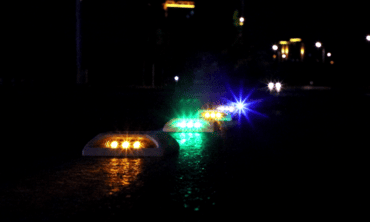
Traditional "Cat's Eyes" reflect light. If a driver's headlights are dim, misaligned, or blocked by fog, the reflection is weak. - Sightline Extension: While passive reflectors are visible at approximately 30-90 meters, RCTraffic’s active LED studs are visible at 500 meters or more. This gives drivers significantly more time to react to curves, hazards, or lane changes at high speeds.
The thinner air at high altitudes in Peru actually increases solar irradiance, but it also reduces the cooling effect of the air. - Optimized PV Panels: RCTraffic uses high-efficiency monocrystalline solar panels that are tuned to harvest energy even in the shorter daylights of winter or under the diffused light of coastal fog.
Most low-end solar studs use Ni-MH batteries, which fail quickly in extreme temperatures. - LiFePO4 Stability: RCTraffic utilizes Lithium Iron Phosphate (LiFePO4) batteries. They offer a much wider operating temperature range and a cycle life of 2,000+ cycles, ensuring the studs remain active throughout the night for many years, even in the freezing Andean nights.
The RC-SRS-A1 is engineered specifically for the heavy-duty requirements of international highways and mining routes.
Peru is a global mining hub, and its highways carry massive freight loads. A road stud must survive being run over by 60-ton trucks repeatedly. - Die-Cast Aluminum Housing: The RC-SRS-A1 features a high-strength aluminum alloy body designed to distribute the load and protect the internal solar cell and LEDs from crushing.
Coastal salt-air in Lima and the humidity of the rainforest are highly corrosive. - Hermetic Sealing: Every RCTraffic stud is vacuum-sealed to prevent internal oxidation, ensuring the longevity of the circuitry in salt-rich coastal environments.
Road debris and harsh maintenance cycles (including snow plows in some Andean sections) can destroy inferior markers. The RC-SRS-A1 is rated for IK10, the highest level of impact protection.
The winding "Death Roads" of the Andes require precise lane guidance. Implementing solar studs on the centerlines and edges of the Carretera Central significantly reduces the risk of run-off-road accidents.
Sudden changes in light levels at tunnel entrances or sudden fog banks on the coast are high-risk zones. Continuous LED guidance provides a "visual tunnel" that stabilizes driver behavior.
In high-traffic urban areas, solar studs can be used to delineate pedestrian crossings and "Ciclovías" (bike lanes), increasing visibility for Lima’s night-time commuters.
For highway concessionaires and the MTC (Ministerio de Transportes y Comunicaciones), solar road studs offer a compelling return on investment: - Accident Reduction: Every prevented accident saves thousands of Soles in emergency response, infrastructure repair, and legal costs. - Durability: While paint fades and passive studs lose their reflectivity due to scratches, RCTraffic solar studs maintain their active brightness for 5-8 years, reducing the frequency of road closures for maintenance.
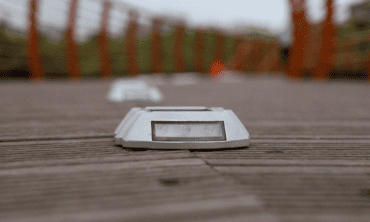
Peru’s national transport network is the backbone of its economy. Protecting the lives of those who travel these diverse topographies requires the best in modern safety technology. RCTraffic’s solar road stud solutions provide the visibility, durability, and technical resilience needed to conquer the fog, the mountains, and the jungle.
Explore RCTraffic’s high-durability solar road stud solutions here: https://www.rctraffic.com/products/road-stud/solar-road-stud/.
Contact our technical team today for a consultation on MTC-regulated projects and bulk inquiries for Peruvian highway concessions.
Q1: Can solar studs survive snow and freezing in the Andes? A1: Yes. RCTraffic’s RC-SRS-A1 series uses LiFePO4 batteries and robust aluminum housings that are tested to operate down to -20°C. They are designed to withstand the freeze-thaw cycles of high-altitude Peruvian routes.
Q2: What is the visibility distance in heavy Lima fog? A2: While visibility for passive reflectors might drop to under 20 meters in dense Garúa, our active LED studs remain visible for 300 to 500 meters, providing a critical safety margin for drivers.
Q3: Are they resistant to heavy mining trucks? A3: Absolutely. Our heavy-duty models are tested for compression resistance of up to 60 tons, making them suitable for the primary mining corridors used by large haul trucks.
Q4: How long do they last in high-UV environments? A4: Thanks to UV-stabilized polycarbonate lenses and high-grade aluminum, RCTraffic solar road studs have a service life of 5 to 8 years even in the intense solar radiation of the Peruvian highlands.
Q5: How many hours of sunlight are needed to charge them? A5: In typical Peruvian conditions, just 3 to 4 hours of sunlight are sufficient to provide over 72 hours of continuous flashing or 12+ hours of constant light.
Q6: Do they require regular maintenance? A6: They are virtually maintenance-free. The rain usually cleans the surface. We recommend a visual inspection every 12 months to ensure they haven't been damaged by extreme road incidents.
To appreciate why RCTraffic’s solar road studs are the preferred choice for South American infrastructure, one must understand the granular engineering that goes into every unit.
Fog consists of tiny water droplets that scatter light. Passive reflectors fail because the light must travel from the car to the stud and back to the driver, being scattered twice. - Direct Emission: RCTraffic LEDs emit light directly toward the driver. This single-path transmission significantly reduces the scattering effect, allowing the light to penetrate the "Garúa" much more effectively. - Color Selection: We offer LEDs in white, yellow, red, and blue. For Peru’s fog zones, yellow and white are recommended for centerlines and edges due to their superior wavelength penetration in moist air.
Mining is the lifeblood of Peru’s economy, and the roads must support massive haul trucks. - Load Distribution: The RC-SRS-A1 is not just a solid block; its internal structure is engineered with reinforced pillars that transfer the weight of a passing tire directly to the road surface, bypassing the sensitive solar panel and battery. - Material Science: We use marine-grade aluminum (ADC12) which provides the perfect balance of lightweight for installation and extreme hardness for compression resistance.
A road stud is a micro-solar power plant. - Energy Conservation: During the day, the MPPT (Maximum Power Point Tracking) controller ensures every photon is converted to energy. At night, the controller uses a light sensor to activate the LEDs. - Synchronized Flashing: For critical curves, RCTraffic offers synchronized models that flash in sequence, creating a "moving" line of light that guides the driver's eye through the turn, a feature highly effective for the winding Andean passes.
Peru’s Ministry of Transport (MTC) has committed to reducing road fatalities. Solar road studs are a high-impact, low-cost intervention compared to building new lanes or installing overhead lighting. - Reduced Emergency Response Costs: Every accident prevented by better visibility reduces the strain on Peru’s emergency services and healthcare system. - Concessionaire Profitability: For private highway operators (concesionarias), durable road studs mean fewer maintenance-related road closures, ensuring a smoother flow of toll-paying traffic.
Reliable roads are essential for the transport of minerals and for tourists visiting sites like Machu Picchu or the Nazca Lines. Solar road studs ensure that these vital economic arteries remain safe and operational 24 hours a day.
When drafting technical specifications for MTC or regional government tenders, engineers should include the following requirements: 1. Compression Resistance: Minimum 30 tons (60 tons for mining routes). 2. Waterproof Rating: IP68 (Tested for immersion at 1 meter for 24 hours). 3. Battery Chemistry: LiFePO4 (to handle Andean temperature swings). 4. LED Visibility: Minimum 500 meters in clear conditions. 5. Warranty: Minimum 3-5 years for professional infrastructure use.
The future of Peru’s infrastructure is active, intelligent, and resilient. By moving away from the limitations of passive reflection and embracing the power of solar-led guidance, Peru can set a new standard for road safety in South America. RCTraffic is proud to be a technical partner in this journey, providing the engineering excellence required to protect Peruvian drivers from the coast to the peaks.
Explore RCTraffic’s high-durability solar road stud solutions here: https://www.rctraffic.com/products/road-stud/solar-road-stud/.
Contact our technical team today for a consultation on MTC-regulated projects and bulk inquiries for Peruvian highway concessions.

.png)
.jpg)
.jpg)